
Bitumen is obtained through post-processing of the residue derived from the final stages of crude oil refining. The combined influence of crude source and refining methodology results in binders that may satisfy identical specification requirements while still possessing distinct chemical biomarkers. As these biomarkers vary even within binders of the same grade, their long-term performance characteristics are also expected to differ. This highlights the importance of understanding the chemical composition of bitumen in greater detail.
The chemical composition of bitumen is commonly investigated using fractionation techniques, among which polarity-based fractionation is widely adopted. In this approach, bitumen is separated into four principal fractions—Saturates, Aromatics, Resins, and Asphaltenes (SARA)—arranged in increasing order of polarity. The relative proportion and interaction of these constituents strongly influence the rheological behavior and long-term performance characteristics of bitumen. Consequently, SARA analysis provides an important link between the chemistry of the binder and its long-term performance.
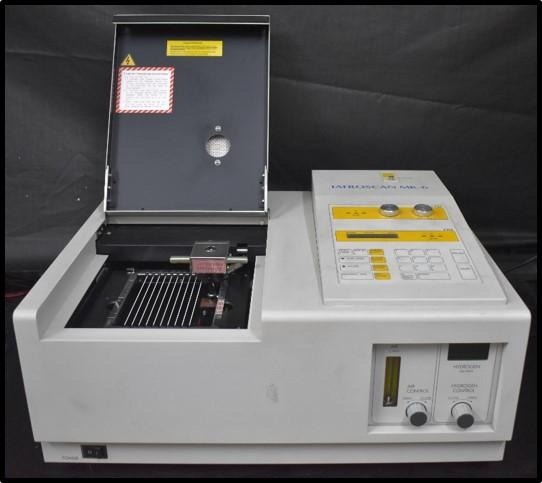
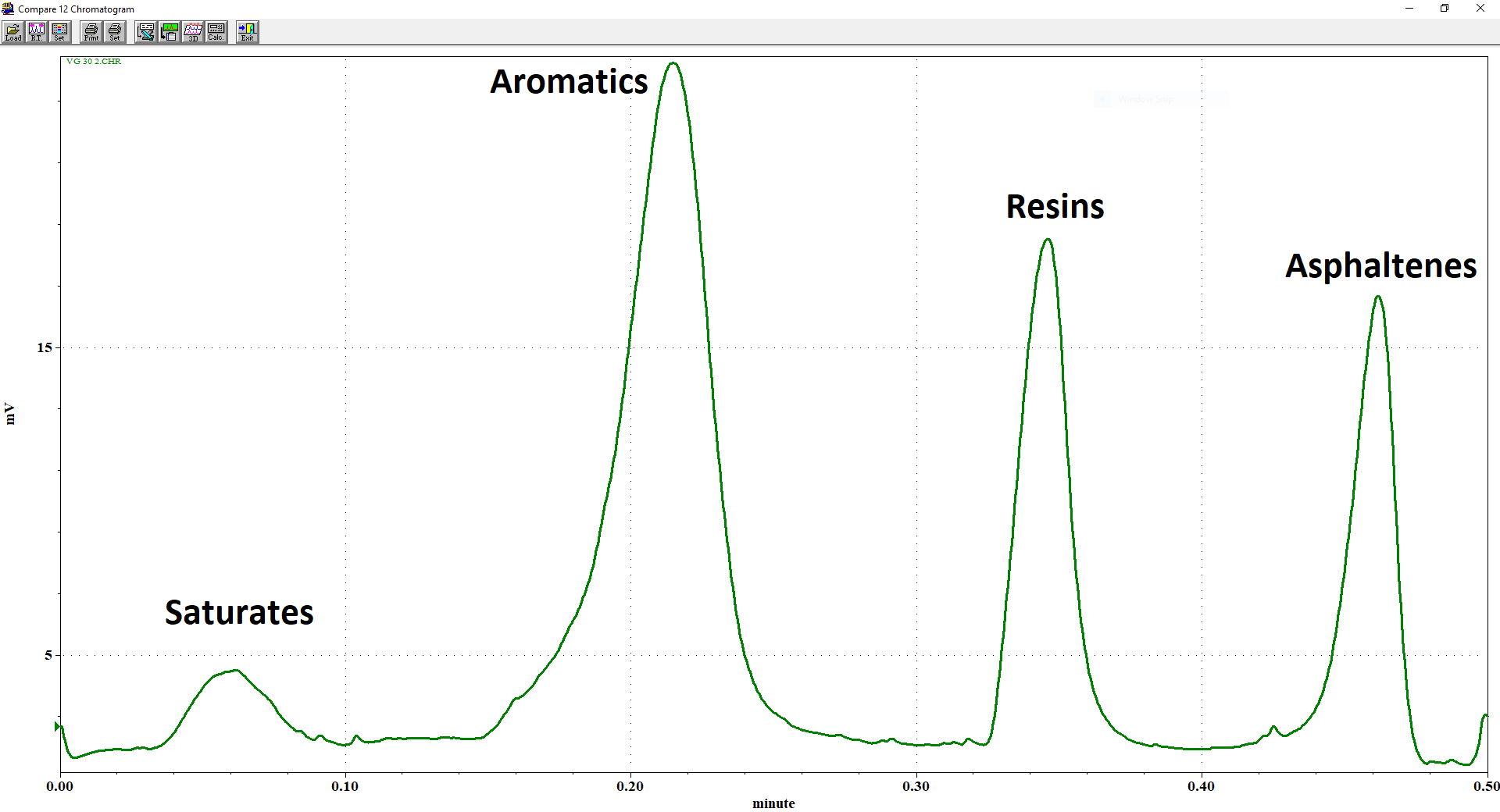
Conventional fractionation methods rely on column chromatography for the separation of bitumen fractions. In this process, asphaltenes are first separated from the binder, after which the remaining maltenes are further fractionated into Saturates, Aromatics, and Resins using chromatographic columns. Although effective, the procedure is lengthy, labour-intensive, and highly dependent on operator skill. These limitations have motivated the adoption of more advanced and versatile techniques such as Thin Layer Chromatography (TLC). When coupled with a Flame Ionization Detector (FID), TLC enables rapid separation of bitumen fractions while the FID simultaneously quantifies the proportion of each individual constituent.
TLC-FID has been extensively used for a variety of materials; however, its applicability to bitumen remains relatively limited. Critical aspects such as the testing procedure, specifications for establishing repeatability and reproducibility, and interpretation of instrument-recorded data must all be clearly proposed and standardised for reliable bitumen characterization. The challenge becomes even more significant when Reclaimed Asphalt Pavement (RAP) binders are evaluated using this technique. Due to ageing, RAP binders generally contain higher proportions of heavier fractions, which require longer durations for elution during TLC separation and additional time for combustion in the FID.
Against this backdrop, MAXRAP is attempting to identify pathways to address these challenges and establish a robust framework for repeatable SARA quantification in bitumen using TLC-FID. MAXRAP focusses on standardising the TLC procedure, capturing the variations in SARA fractions with evolution in aging, quantifying the changes in SARA fractions in the recycled blends and thereby makes an attempt to identify its correspondence to rheological properties.